Financial Aid Made Their Smith Stories Possible
Alum News
Three alums trace their career paths back to transformative support from the college

Published December 15, 2025
Melissa Day ’98 gets tears in her eyes when she recalls receiving her financial aid package from Smith. It was only with robust support that she was able to attend her dream school: “Smith came through for me so enormously,” she says. Sirinya Tritipeskul Matute ’04 and Moya Connelly ’95 feel similarly, citing financial aid from Smith as a game changer that allowed them to push themselves academically and flourish in college. With Smith as a launchpad, all three alums are now having a tremendous impact in their communities and the world.
Melissa Day ’98
When Melissa Day was considering her college options, no other school compared to Smith. But to her California-based family, it seemed out of reach financially. “My mom and I were so scared,” she says. “Great if I got accepted, but financial aid—especially a scholarship—would determine if I was really able to go.”
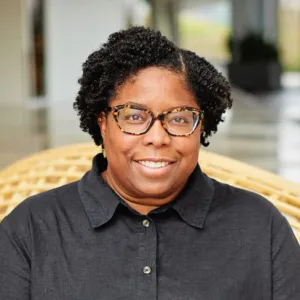
At Smith, Day earned her bachelor’s degree in government and psychology, and she received additional funding from the dean’s office to participate in summer programs and internships. One summer, she interned with the Superior Court of the District of Columbia in the family mediation section, where she was encouraged to sit in on court hearings.
“At one hearing, the judge called me to the bench during a break,” she recalls. “I was beaming. I had never seen a Black woman judge. She asked me about my internship and if I planned to go to law school. She took ten minutes out of her day for me, and I remember how it made me feel. Without the scholarship money from the dean’s office, there’s no way I would have had that experience.”
After Smith, Day earned her law degree from Loyola Law School, Los Angeles. She went on to private practice and to serve as a deputy attorney general for the California Department of Justice in its employment law section, then moved to Seattle and worked at Microsoft as a senior corporate counsel manager in employment law. Currently, she’s the vice president, head of employment law at Expedia Group.
“The scholarship aid sent me a message that I was important enough, that I deserved this,” she says. She still draws confidence from this message. “There are not a lot of people who look like me in certain roles. When I attend an event or meet with a group of interns or mentees at Expedia, I tell them, ‘You can do this. Carve your own path and find great mentors and sponsors along the way.’”
As for paying it forward as a Smithie, she says, “Check to see if your employer has a match program. Some match your donation dollar for dollar up to a certain amount each year.”
Sirinya Tritipeskul Matute ’04
Sirinya Matute can trace her career as a transportation planner back to leadership roles she held at Smith, where she majored in economics and minored in education. As a work-study student for the Student Government Association, she ran its initiative providing minivans for houses and student clubs to borrow.
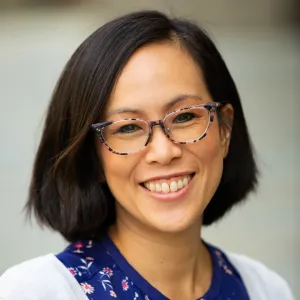
“That was my early foray into transportation demand management, or TDM,” she says. The service was meant to reduce the number of student vehicles on campus. “Later on, I was able to say I’d been working in the field of TDM for almost 25 years!”
Now, Matute is a transportation planner at the Southern California Association of Governments, where she’s again trying to reduce the number of cars on the road, this time by “transforming ordinary bus stops and train stations into vibrant mobility hubs” where people can access multiple modes of transportation, including public transit and carshare.
Earlier in her career, Matute successfully advocated for Measure R, a ballot initiative to fund an array of transportation projects in Los Angeles. She’s held roles at the city of Santa Monica, the city of Hermosa Beach, and UCLA (where she earned a master’s in urban planning), and she is the president of the Parent Teacher Association at her son’s school in Santa Monica.
Matute says she was only able to attend Smith thanks to generous financial aid. Her parents immigrated from Thailand and worked in the hotel industry when she was growing up in Los Angeles. She learned about Smith after reading a biography of Ann M. Martin ’77, author of The Baby-Sitters Club series.
Investing in Smith is “a priority for me,” says Matute. “Smith makes a promise to students: to build their potential to change the world and their communities. As graduates of the college, we can help the college deliver on this promise through our charitable gifts.”
Moya Connelly ’95
Moya Connelly is the founder and CEO of Surmont Capital, a sustainable finance consulting firm that works with clients seeking to invest in social and environmental solutions that also deliver financial returns.
“Sustainable finance is about making change in the world, and building systems that allow people to help themselves,” she says.
Connelly earned an economics degree from Smith and an M.B.A. from the University of Virginia Darden School of Business. She has developed funds targeted toward conservation, forestry protection, and solar energy, among other areas.
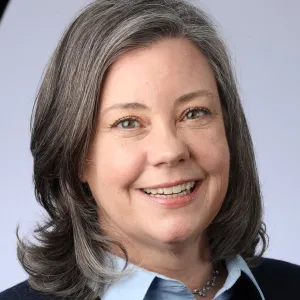
As with Day and Matute, receiving financial aid was critical for Connelly. “The economics of college were a huge determinant,” she says. Her parents worked for the commonwealth of Massachusetts, and were already paying for Connelly’s brother to attend college. “I aligned with Smith culturally—I loved that there was an expectation of excellence—but if I hadn’t been offered financial aid, I wouldn’t have been able to attend.”
Connelly credits Smith for developing the social consciousness that has infused her career and made her a sought-after thought leader in sustainable investing. “I wouldn't be in this field without Smith,” she says. “The caliber of students and professors and the willingness to ask deep questions got my intellectual juices going.”
Smith also imparted the analytical tools that allow Connelly to match investment strategies with social and environmental causes. “Smith gave me the building blocks to know how to create solutions,” she says. “I’ll be forever grateful for those gifts.”
To express that gratitude, Connelly has donated in support of scholarship aid every year since she graduated. “I want others to have the experience of being able to go to Smith,” she explains. “Participation matters, even if it’s a small gift. All those small gifts, collectively, help lift up another Smithie.”